Mbogo Valley Tea Factory – Kipchimchim Group
Kenya
Tea Manufacturing
New Greenfield Project
20,000 kg Green Leaf/Day (8–10-hour shift)
75–80%
3%
Orthodox Tea
Wizard Continuous Withering Machines, Smart Feed Weigh Feeder, ROLLOMAX Rolling Table XL with PLC, Perforated Googie Type Roll Breaker, CFM, Conquest Dryer, Suprex Fibre Extractor, Myddleton Stalk Extractor, Hexagonal Googie, Michie Sifter, Rotary Sifter, Winnower with Bag Filter & Interconnecting Conveyors
Processing large volumes of green leaves into premium Orthodox tea requires a carefully coordinated production system. Unlike disconnected processing setups, an integrated Orthodox tea line must maintain a steady flow of delicate tea material while controlling the conditions at each stage of manufacture.
For Mbogo Valley Tea Factory – Kipchimchim Group, the requirement was to establish a new processing line capable of handling 20,000 kg of green leaf per day over an 8–10 hour shift and converting it into high-quality Orthodox tea.
The processing system needed to bring together multiple critical stages, from green leaf handling and automated withering to rolling, oxidation, drying, and sorting, within one connected workflow. At the same time, the process needed to preserve the whole-leaf character and nuanced quality associated with premium Orthodox tea.
The focus was therefore on developing a high-volume, automated processing arrangement that could maintain continuity across the production line while providing greater control over processing conditions, material movement, and final product quality.
T&I Global supplied an integrated automated Orthodox tea processing line for Mbogo Valley Tea Factory, connecting the major stages of tea manufacture into a continuous production workflow.
The complete process follows:
Green Leaf Withering → Weigh Feeding → Withered Leaf Rolling → Lump Breaking → Fermenting → Drying → Sorting
This integrated arrangement combines specialised machinery for each stage while using automated feeding, conveying, and process control to maintain a smooth flow of tea throughout production.
The process begins with Wizard Continuous Withering Machines, which provide the initial withering stage for the incoming green leaf.
Withering is a critical stage in Orthodox tea manufacture, and the automated system is designed to maintain more consistent physical and chemical withering. The line incorporates variable-frequency-drive fans and moisture-sensing capabilities to optimise airflow according to processing conditions.
This helps establish a more uniform starting point for the downstream rolling process while also supporting more efficient energy use.
Following withering, the tea moves through the Smart Feed Weigh Feeder, which supports controlled feeding into the subsequent processing stages.
Automated conveyors and feeding mechanisms connect the different sections of the line, helping minimise manual transportation and rough handling of the leaf.
This gentler material movement is particularly important for Orthodox tea, where preserving the delicate whole-leaf structure is an important quality consideration.
The withered leaf is then processed through the ROLLOMAX Rolling Table XL with PLC.
The rolling stage provides controlled mechanical treatment of the withered leaf while maintaining the characteristic twisted structure associated with Orthodox tea.
The rolling system incorporates programmable pressure profiles designed to replicate the controlled action of traditional hand rolling. This helps promote the required internal cell rupture for flavour development while maintaining the desired whole-leaf appearance.
Following rolling, the processed tea passes through the Perforated Googie-Type Roll Breaker.
This stage helps break down the rolled material before it progresses to fermentation, supporting smoother downstream processing and continuous movement through the line.
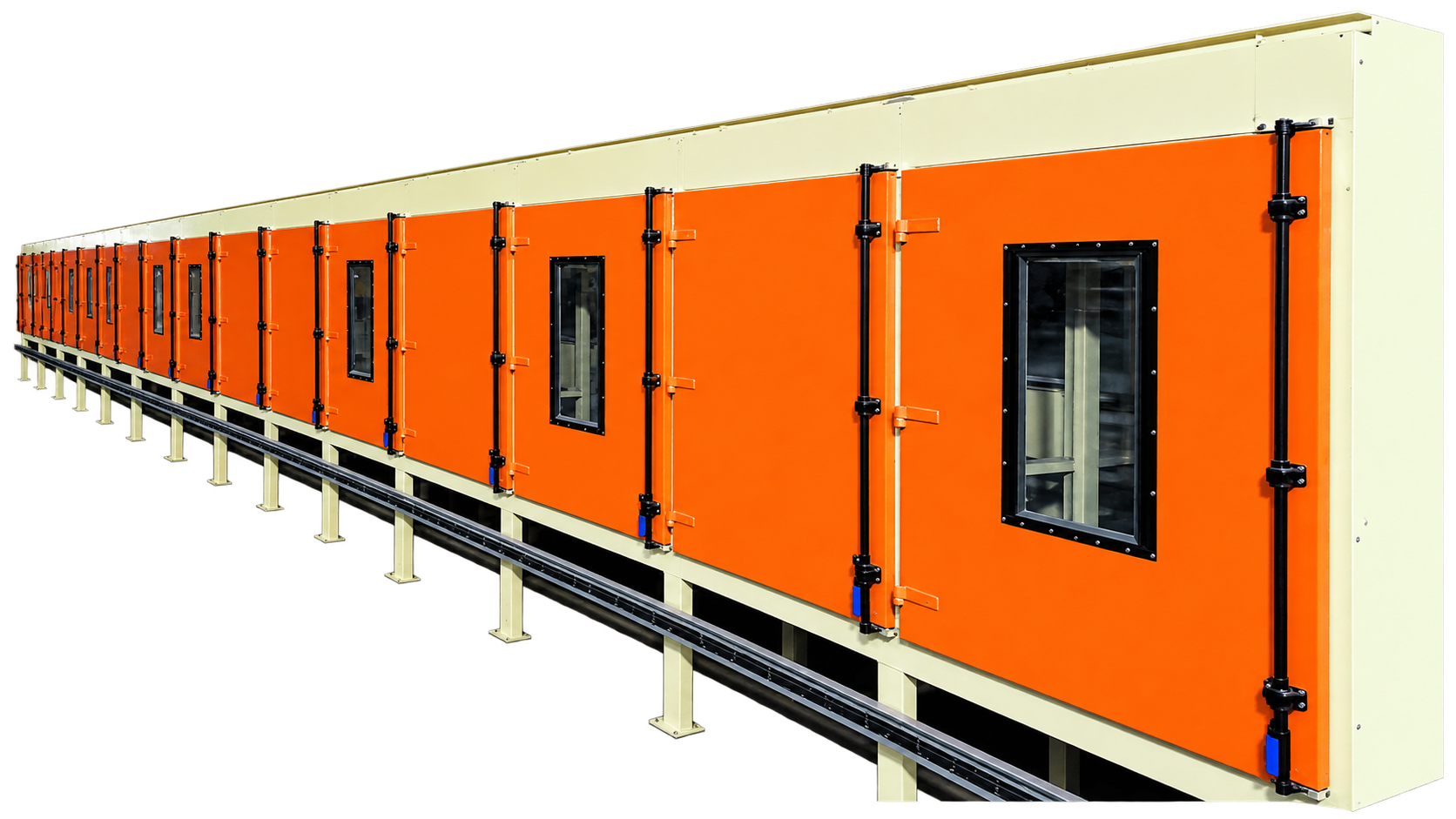
The processed tea then moves into the MATRIX CFM for fermentation.
The enclosed automated oxidation arrangement is designed to maintain controlled temperature and hygrometric conditions during this stage. This helps reduce variations caused by external factory conditions and supports more uniform fermentation throughout production.
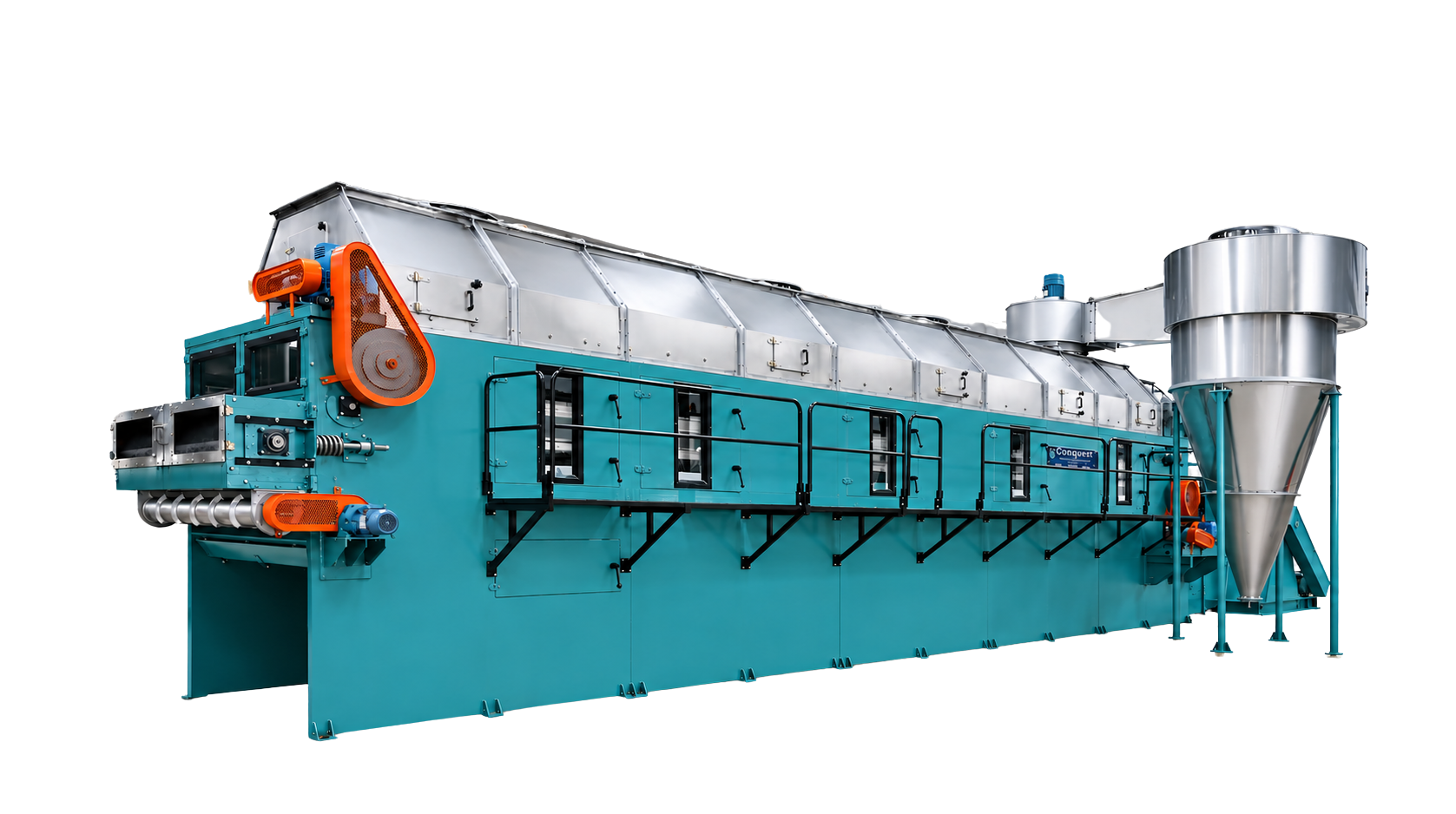
After fermentation, the tea proceeds to the Conquest Combination Dryer for drying.
Drying is a critical stage in determining the final condition of the made tea, requiring controlled moisture removal after oxidation. The integrated arrangement allows the processed tea to move directly from fermentation towards drying without unnecessary manual transfer.
The overall system is designed to support continuous processing while maintaining control over the key parameters influencing the finished product.
Following drying, the line incorporates specialised equipment, including the Suprex Fibre Extractor and Myddleton Stalk Extractor.
These systems form part of the downstream processing and cleaning arrangement, helping separate unwanted fibre and stalk material from the processed tea before final sorting and grading.
The final stages incorporate Hexagonal Googie, Michie Sifter, Rotary Sifter, and Winnower with Bag Filter.
The sorting system enables the processed tea to be separated and graded efficiently, including the separation of whole leaves, brokens, and fannings.
Automated sorting reduces the requirement for secondary handling while supporting the recovery of higher-value grades from the processed tea.
Interconnecting Conveyors link the individual processing stages together, creating a continuous material flow throughout the factory.
This integration is important to the overall system because it reduces the need for manual transfer between machines while helping prevent interruptions and bottlenecks between processing stages.
By connecting withering, rolling, oxidation, drying, and sorting into one automated workflow, the new line supports continuous processing and high daily throughput.
The integrated design also improves labour utilisation and enables smoother movement of tea throughout the production process, helping minimise the bottlenecks and downtime associated with disconnected processing systems.
Centralised PLC/SCADA-based control enables real-time monitoring and adjustment of important parameters such as temperature, airflow, and processing time.
Greater process visibility helps reduce guesswork and supports more consistent processing conditions from batch to batch.
The automated feeding and conveying arrangement minimises manual transportation and rough handling of the tea.
By reducing unnecessary leaf breakage, the system helps preserve the delicate whole-leaf structure that is important for premium Orthodox tea grades.
The automated withering system optimises airflow according to processing conditions, supporting more uniform withering while reducing overall energy consumption.
Combined with controlled drying and automated process management, the integrated line is designed to improve operational efficiency across the production cycle.
The automated sorting arrangement enables rapid and accurate separation of different tea grades, including whole leaves, brokens and fannings.
By reducing secondary handling and improving grading efficiency, the system helps maximise the proportion of valuable primary grades recovered from each batch of green leaf.

For Mbogo Valley Tea Factory, the project established a new automated Orthodox tea processing line capable of handling 20,000 kg of green leaf per day over an 8–10-hour shift.
The integration of withering, feeding, rolling, lump breaking, fermentation, drying and sorting created a continuous production workflow rather than a series of disconnected operations. This helped the factory improve material flow, optimise labour utilisation and minimise potential bottlenecks during production.
The project’s impact extends beyond throughput. By combining gentle leaf handling, controlled withering, adaptive rolling, controlled oxidation, precision drying and automated sorting, the system is designed to preserve the whole-leaf character and nuanced flavour profile required for premium Orthodox tea production. This creates an opportunity for the factory to consistently produce higher-value Orthodox grades and strengthen its position in the premium tea market.
The automated material handling and process control also reduce dependence on manual intervention. Together with energy-efficient withering and drying, this contributes to lower operating costs per kilogram of made tea.
During peak plucking seasons, the continuous and integrated workflow is designed to help the factory manage high volumes of incoming green leaf while reducing the risk of backlogs and associated quality degradation.
Overall, the Mbogo Valley project demonstrates how end-to-end automation and integrated process design can transform Orthodox tea manufacturing, bringing together process control, gentle leaf handling, energy efficiency, and high-accuracy sorting to support consistent premium tea production at scale.
T&I Global Pvt. Ltd. (TIGL)
+91-33- 2283 3612
[email protected]